Established in 1947 as the first national park created for its biodiversity, Everglades National Park protects 1.5 million acres of wetland, forest, and marine habitats and the native plants and animals that call it home. With several international designations, the park provides a major source of drinking water for local residents of South Florida and recreational opportunities for all.
1.5Macres of parkland
778.2Krecreation visits, 2025
Jan · Feb · Decnearby climate picks
Seasonal access & reservations
No reviewed guidance for this selection. Check the park's official planning pages; missing coverage does not establish access.
Selected guidance only; separate from climate comfort and current conditions.
Official conditions Not checked
The conditions feed has not been connected for this park.
Visit the separate Shark Valley entrance for its landscape and wildlife-viewing opportunities. Arrange any tram or bicycle activity ahead and plan for heat.
Editorial recommendations, reviewed 2026-10-17. Full park days, excluding travel to and from the region. A first-visit outline for a general traveler; adapt to mobility, fitness, season, reservations, and current conditions. These are suggested days, not reserved activities or guaranteed routes.
Rangers are not the only naturalists that lead groups in the park. Check out the tour options offered by park partners and concessions.
The National Park Service requires specific authorizations for commercial businesses to operate in national parks. If you're interested in providing a service in Everglades, read more about doing business with us .
Approved companies provide a variety of services and tours inside Everglades, including:
Shark Valley Tram Tour
Guided two-hour narrated tram tours are offered along a fifteen-mile loop trail into the "River of Grass."
Everglades Institute Tours
Everglades Institute is a non-profit partner providing in-depth educational and adventurous tours.
Permitted Tour Guides
See the park with assistance of someone who's familiar with different aspects of this 1.5-acre wilderness.
Explore the park on an airboat tour!
Everglades Safari Park
Backcountry Boat Tour
The 90-minute tour ventures up the Buttonwood Canal through Coot Bay and Tarpon Creek into the mouth of Whitewater Bay.
Florida Bay Boat Tour
This 90-minute tour departs Flamingo Marina and ventures into the expansive Florida Bay.
Ten Thousand Islands Boat Tour
Guided 90-minute boat tours through the scenic Ten Thousand Islands are offered daily.
Navigable waters cover one third of the Park, creating excellent boating opportunities, but it can be challenging. Learn more.
Have a Great Day on the Water
We've all been there... a much anticipated day on the water takes an unexpected turn. But being prepared can make all the difference in the outcome. Here are a number of resources to help you "Have a great day on the water!" The marine waters of the park are well known for boating , fishing , paddling , and birding. Each area has its own unique features and challenges. Narrow channels cut through long banks of mud and seagrass, separating the basins of the shallow coastal waters in Florida Bay. Other areas, such as the Ten Thousand Islands, have sandbars and sharp oyster reefs.
How to get a park pass online or in person
Promoting safe boating, orientation and resource protection
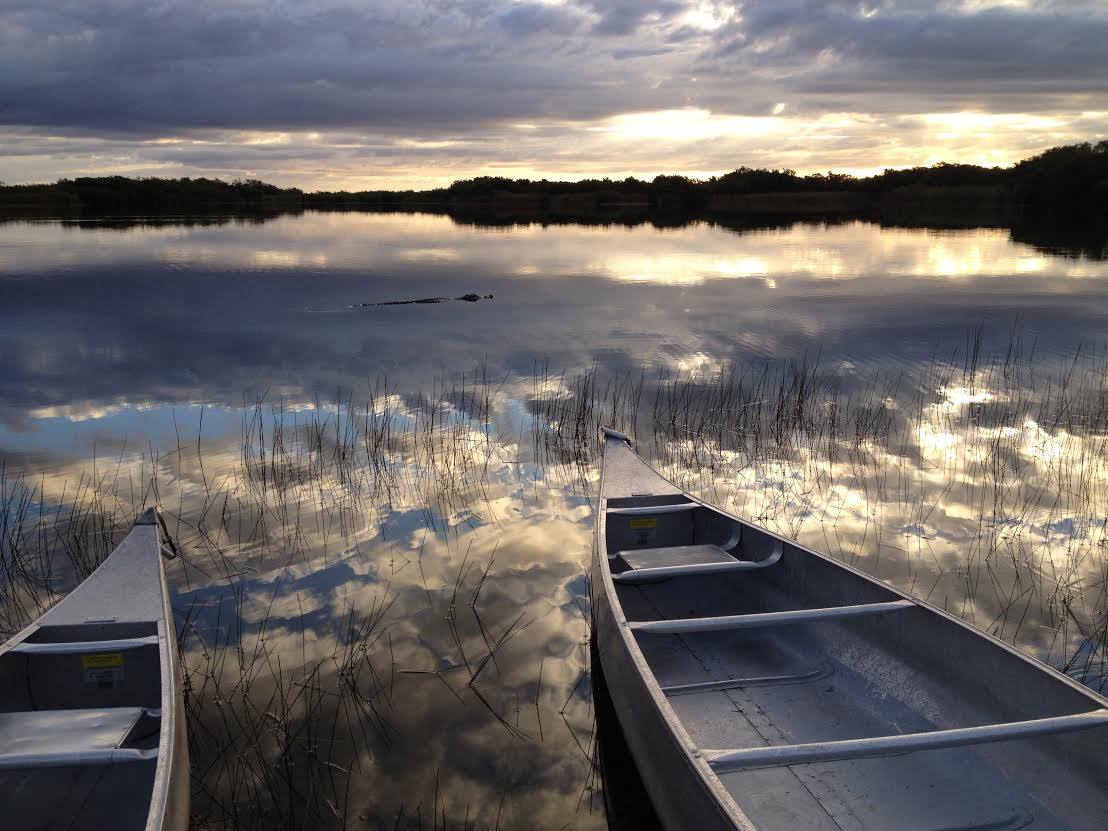
The Park offers many paddling opportunities to explore the natural beauty of this area.
Paddling through the Everglades
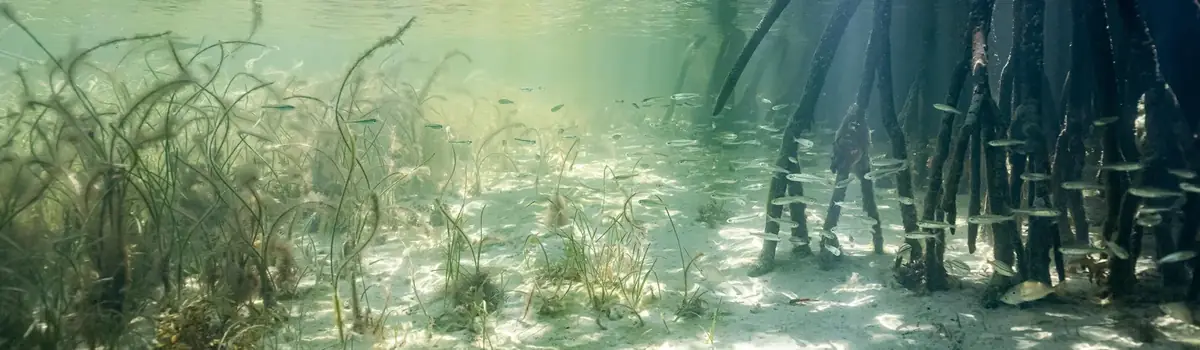
Everglades National Park offers many paddling opportunities to explore the natural beauty of this area through freshwater marsh, mangrove forests, the 10,000 Islands, and the open waters of Florida Bay.
Canoe and kayak trips range from a few hours to several days depending on length and complexity of the trail.
You can bring your own canoe or kayak and launch from several locations around the park or rent a kayak or canoe in the park. Alternatively, you could hire a permitted guide who will outfit your trip and lead your adventure. A list of permitted guides can be found at this link.
Canoe and Kayak Rental Information
Gulf Coast Canoe and Kayak Rentals
Rentals are available nearby through private businesses in Everglades City
Flamingo Canoe and Kayak Rentals
Available from Flamingo Adventures
NPS / Jane Gamble
Gulf Coast Paddling Trails
Sandfly Island Loop
Flamingo Paddling Trails
These trails range from beginner to advanced and can be accessed from launch areas in the Flamingo marina or along the main park road as you approach Flamingo. Flamingo is located 38 miles from the park entrance station in Homestead. Below is a list of designated paddling trails in the Flamingo area.
Florida National Parks Association
Everglades Institute Nine Mile Pond Tours
Learn more at: Everglades Institute
Overnight Trips in the Wilderness
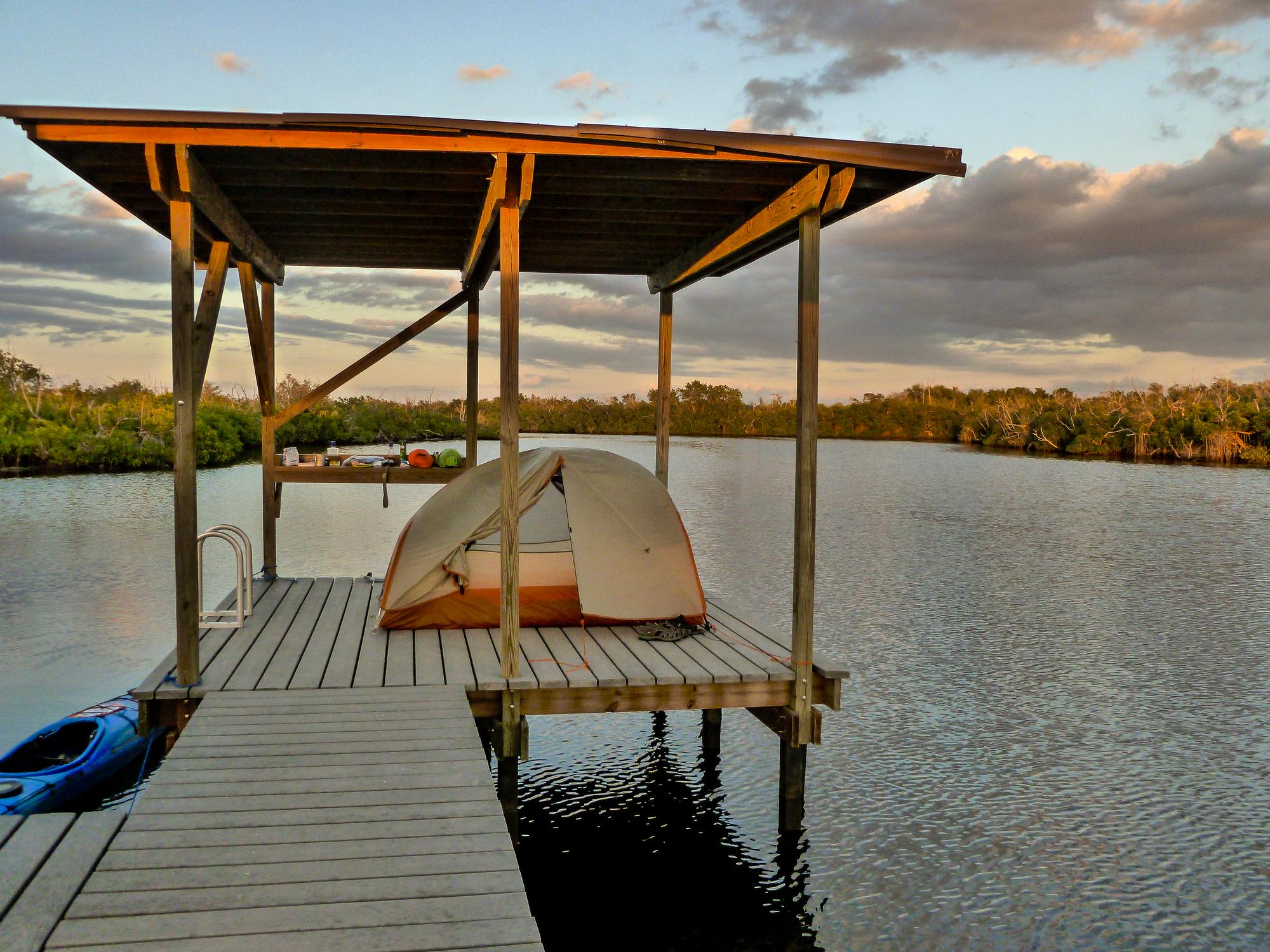
For multi-day trips, wilderness camping in Florida Bay and the 10,000 Islands or along the 99-mile Wilderness Waterway require careful planning, but are well worth the experience.
Fishing is an excellent way to experience the park. Learn all you need to know about this activity here.
NPS Photo M. Collier
Fishing In Everglades National Park
One third of Everglades National Park is covered by saltwater, the rest is a freshwater wetland. Both offer ample opportunity for recreational fishing.
Fishing in a nutshell
Freshwater Fishing
License : A Florida freshwater fishing license is required to fish in freshwater or to possess fresh water species.
Bait : Live or dead fish (including minnows and shiners) or amphibians, and non-preserved fish eggs or roe, are prohibited. Digging for bait inside the park is not permitted.
Closed to Fishing : No fishing is allowed at the Ernest F. Coe (Main) Visitor Center lakes, Royal Palm Visitor Center area and trails, Chekika Lake, along the first 3 miles of the Main Park Road, including Taylor Slough, or along the Shark Valley Tram Road.
Saltwater Fishing
License : A Florida saltwater fishing license is required to fish in saltwater or to possess saltwater species.
Bait : Bait, except for mullet and shrimp, is not included in bag limits. Saltwater bait: shrimp, minnows, pilchards, pinfish, mullet, mojarras (shad), or ballyhoo. Bait may be taken with hook and line, dip net (not wider than 3 feet / 0.9 m), and cast net.
Closed to Fishing : No fishing is allowed in Eco, Mrazek or Coot Bay Ponds at any time. No fishing is allowed at the Flamingo Marina during daylight hours.
Manatee Etiquette : Areas frequented by manatees have been posted. Keep an eye out for manatees. Slow to an idle if observed, but do not approach or molest.
Lobster and Queen Conch : The taking and possession of lobster and queen conch is prohibited.
Recreational Crabbing : Stone crabs, during open state season, and blue crabs may be taken by recreational fishermen using attended gear (for example: star trap, baited line, landing net, etc.). Crabbers are limited to five (5) traps. Unattended gear, including traps, is prohibited.
Shrimp : Shrimp may be taken by dip net (not wider than 3 feet / 0.9 m) or cast net, for personal use only, not for sale.
Additional Regulations
Licensed anglers are limited to possession of 20 fish/person at any time, but may possess no more than 10 fish of any one species.
Please be aware that the bag limit for many species is less than 10 fish.
There is no possession limit for non-native species.
All anglers are reminded to pick up a current copy of the Everglades Fishing Regulations available at all visitor centers and entrance stations.
Mercury Warning
Warning! High levels of mercury have been found in Everglades bass and in some fish species in northern Florida Bay. Do not eat bass caught north of the Main Park Road. Do not eat bass caught south of the Main Park Road more than once a week. Children and pregnant women should not eat any bass. The following salt water species caught in northern Florida Bay should not be consumed more than once per week by adults or once per month by women of child-bearing age and children: spotted seatrout, gafftopsail, catfish, bluefish, crevalle jack, or ladyfish.
Park waters provide thousands of acres of shallow water flats, channels, and mangrove keys in which to fish. Before leaving shore, think safety! Be aware of local boating information. Remember that collecting plants and animals in Everglades National Park is prohibited. This includes such things as orchids, airplants, seahorses, starfish, conch, tropical fish, coral, sponges, sea shells, and driftwood (except for fuel).
Florida Fish and Wildlife Conservation Commission Fishing in Florida website.
Fishing from the shore is very limited. Follow this link to learn more about shoreline fishing.
A valid Florida fishing license is required to fish in the park although exceptions may apply, and fees vary. Children under 16 years of age do not require a license. Visitors fishing within Everglades National Park must follow the fishing license requirements in accordance with the laws and regulations of the Florida Fish and Wildlife Conservation Commission .
Fishing Regulations
Unless otherwise provided for, fishing regulations apply to all finfish found in both fresh and saltwater, and mollusks and crustaceans found in saltwater (shellfish). Other taxa, including amphibians, and freshwater mollusks and crustaceans (e.g. waterdogs, crayfish) are not considered “fish” for the purpose of NPS fishing regulations and are addressed by NPS regulations governing “wildlife” ( 36CFR2.2 ).
These fishing regulations apply, regardless of land ownership, on all lands and waters within the park that are under the legislative jurisdiction of the United States.
Fishing shall be in accordance with the laws and regulations of the State of Florida ( 36CFR2.3 (a)) except as provided below. Where there is a conflict between a state regulation and a federal (NPS) regulation, the state regulation is superseded by the federal regulation.
For state fishing regulations please visit the Florida Fish and Wildlife Conservation Commission website.
For more information on how NPS fishing regulations work, go to the regulations page on the NPS Fish and Fishing website ( https://www.nps.gov/subjects/fishing/how-regulations-work.htm ).
The following are prohibited, as per National Park Service regulations:
Fishing in fresh waters in any manner other than by hook and line, with the rod or line being closely attended.
Possessing or using as bait for fishing in freshwaters, live or dead minnows or other bait fish, amphibians, non-preserved fish eggs or fish roe, except in designated waters.
Chumming or placing preserved or fresh fish eggs, fish roe, food, fish parts, chemicals, or other foreign substances in fresh waters for the purpose of feeding or attracting fish in order that they may be taken.
Commercial fishing, except where specifically authorized by Federal statutory law.
Fishing by the use of drugs, poisons, explosives, or electricity.
Digging for bait, except in privately owned lands.
Failing to return carefully and immediately to the water from which it was taken a fish that does not meet size or species restrictions or that the person chooses not to keep. Fish so released shall not be included in the catch or possession limit: Provided, that at the time of catching the person did not possess the legal limit of fish.
Fishing from motor road bridges, from or within 200 feet of a public raft or float designated for water sports, or within the limits of locations designated as swimming beaches, surfing areas, or public boat docks, except in designated areas.
Introducing wildlife, fish or plants, including their reproductive bodies, into a park area ecosystem. This includes the discarding and/or dumping of bait and bait buckets.
The use or possession of fish, wildlife or plants for ceremonial or religious purposes, except where specifically authorized by Federal statutory law, or treaty rights.
Except as otherwise designated, fishing with a net, spear, or weapon in the salt waters of park areas shall be in accordance with State law.
The following additional regulations apply only within Everglades National Park:
Note that Florida saltwater recreational fishing seasons in the Atlantic Ocean and the Gulf of America differ. Please ensure you are fishing in season for your location.
In areas not closed to fishing, it is permitted to fish from public docks, piers and chickees.
No fishing is allowed at the Ernest F. Coe (Main) Visitor Center lakes, Royal Palm Visitor Center area and trails, Chekika Lake, along the first 3 miles of the Main Park Road, including Taylor Slough, or along the Shark Valley Tram Road.
Fishing in the following waters is prohibited :
Flamingo Marina and boat ramps, sunrise to sunset.
Gulf Coast (Everglades City) Marina and boat ramp, sunrise to sunset.
The cement seawall running parallel with the breezeway from the Flamingo Visitor Center to the Western tip of the seawall.
The shoreline along the Flamingo Campground, from the amphitheater to the westernmost portion of "C" Loop, from sunset to sunrise.
Paurotis Pond is closed to fishing when the pond is closed to entry as posted.
Catch and Release Area
Joe Bay and its Eastern most portion, commonly known as Snag Bay, and the associated creeks between the two, is open to “catch and release” fishing for Finfish only. No marine life may be possessed inside the area, except for limited quantities of the following species to be used specifically as bait: Shrimp, pilchards, pinfish, mojarras, ballyhoo, (Mullet less than eight (8) inches total length), and killifishes, silversides, and livebearers (also known as minnows) from the families Cyprinodontidae, Atherinidae, Poeciliidae, respectively.
Except for taking finfish, shrimp, bait, crabs, and oysters, as provided in this section or as modified under 36 CFR 1.5, the taking, possession, or disturbance of any fresh or saltwater aquatic life is prohibited.
Only the following fish or parts thereof may be legally taken and/or possessed within Everglades National Park:
Stone crab claws
Marine finfish, other than ornamental tropical fish, that may be legally taken and possessed in the State of Florida
Freshwater fish, other than ornamental tropical fish
Saltwater bait fish (Shrimp, mullet, and bait fish (minnows, pilchards, pinfish, mojarras, ballyhoo or bait mullet (less than eight (8) inches in total length))
Ornamental Tropical Fish : For purposes of this compendium, ornamental tropical fish shall be defined as fishes of species, and where applicable, sizes listed in Appendix B of the Superintendent's Compendium ( email us for a copy ).
Except as provided in this section, only a closely attended hook and line may be used for fishing activities within the park.
Crabbing for stone or blue crabs may be conducted using attended gear only and no more than five (5) traps per person. Persons using traps must remain within one hundred (100) feet of those traps. Unattended gear or use of more than five (5) traps per person is prohibited.
Shrimp, mullet, and bait fish (minnows, pilchards, pinfish, mojarras, ballyhoo or bait mullet (less than eight (8) inches in total length) may be taken with hook and line, dipnet (not exceeding 3 feet at its widest point) or cast net, for use as bait or personal consumption.
A dipnet or cast net may not be dragged, trawled, or held suspended in the water.
Possession or use of a cast net which exceeds 20 feet in diameter (total size of the net not to exceed 10 feet from the lead line to the horn) is prohibited.
Bag Limits : The current Florida State laws governing bag and possession limits shall apply, and the following restrictions noted:
The bag limit per person shall be ten for any finfish species having no limit or a vessel or per person limit greater than ten. If a State vessel limit applies, the limit shall be ten per person or the vessel limit, whichever is less.
The bag limit identified above does not apply to the following fish taken by hook and line: Tilapia (Oreochromis aureus, Oreochromis mossambicus, Tilapia marie), Oscars (Astronotus ocellatus), Lionfish (Pterois volitans), and Cichlids (Cichlasoma sp). There is no possession or bag limit on non-native species.
The maximum daily possession limit, of all finfish species in aggregate, shall be 20 fish per person; however, neither the state nor the park limit for a species may be exceeded within the aggregate.
The daily limit for shrimp (heads on) shall be 5 gallons per person or vessel, whichever is less.
State law applies with respect to bait finfish and blue crab.
Tagging, marking, fin clipping, mutilation or other disturbance to a caught fish, prior to release is prohibited without written authorization from the Superintendent.
Fish may not be fileted while in the park, except that:
Up to four (4) filets per person may be produced for immediate cooking and consumption at designated campsites or on board vessels equipped with cooking facilities.
Fish may be fileted while at the designated park fish cleaning facilities, before transportation to their final destination.
Nets and gear that are legal to use in State waters, and fish and other edible or non-edible sea life that are legally acquired in State or Federal waters but are illegal to catch in State waters or possess in the waters of Everglades National Park may be transported through the park only over Indian Key Pass, Sand Fly Pass, Rabbit Key Pass, Chokoloskee Pass and across Chokoloskee Bay, along the most direct route to or from Everglades City, Chokoloskee Island or Fakahatchee Bay.
Boats traveling through these passages with such nets, gear, fish, or other edible products of the sea must remain in transit unless disabled or weather and sea conditions combine to make safe passage impossible, at which time the boats may be anchored to await assistance or better conditions.
Fish Consumption Advisories in National Park Waters
Everglades National Park Fish Consumption Advisories
Enjoy the crackling of a campfire and sleep under the stars. The Park offers camping opportunities in wilderness and in the front country.
Plan Your Camping Trip
Everglades National Park offers wonderful camping opportunities in both the frontcountry and the wilderness backcountry
Frontcountry Camping
Flamingo Campground
Campground Features
Fire/Stove Policy
Operating Hours & Seasons
Contact Information & Directions
Phone number (Voice)
Mailing Address
Physical Address
Additional Information & Regulations
Additional Information
Cell Phone Additional Information
Internet Additional Information
Long Pine Key Campground
NPS / Jane Gamble
Wilderness Camping
There are a number of ground sites, beach sites, and elevated camping platforms ("chickees") available in various locations in the park. Most wilderness camping sites are accessible by canoe, kayak, or motorboat, though a few may be reached by hikers. A wilderness camping permit is required for all wilderness campsites and issued the day before or day of your trip either online or at the Flamingo Visitor Center. Preparation is extremely important for a successful trip. Trip planning information can be found here. Starting January 2, 2023, all Marjory Stoneman Douglas Wilderness campsites will only be available for advanced reservations on Recreation.gov. There will no longer be campsites held as "walk-up." Campsites will be open for reservations 90 days in advance. Rangers can still assist campers in booking an unreserved site on the day of their trip. This change allows campers to independently plan their wilderness camping itinerary. It also removes the need to travel to the visitor center to purchase "walk-up" sites. For questions about the Flamingo District please contact the Guy Bradley Visitor Center. For the Gulf Coast District, please call 305-242-7700.
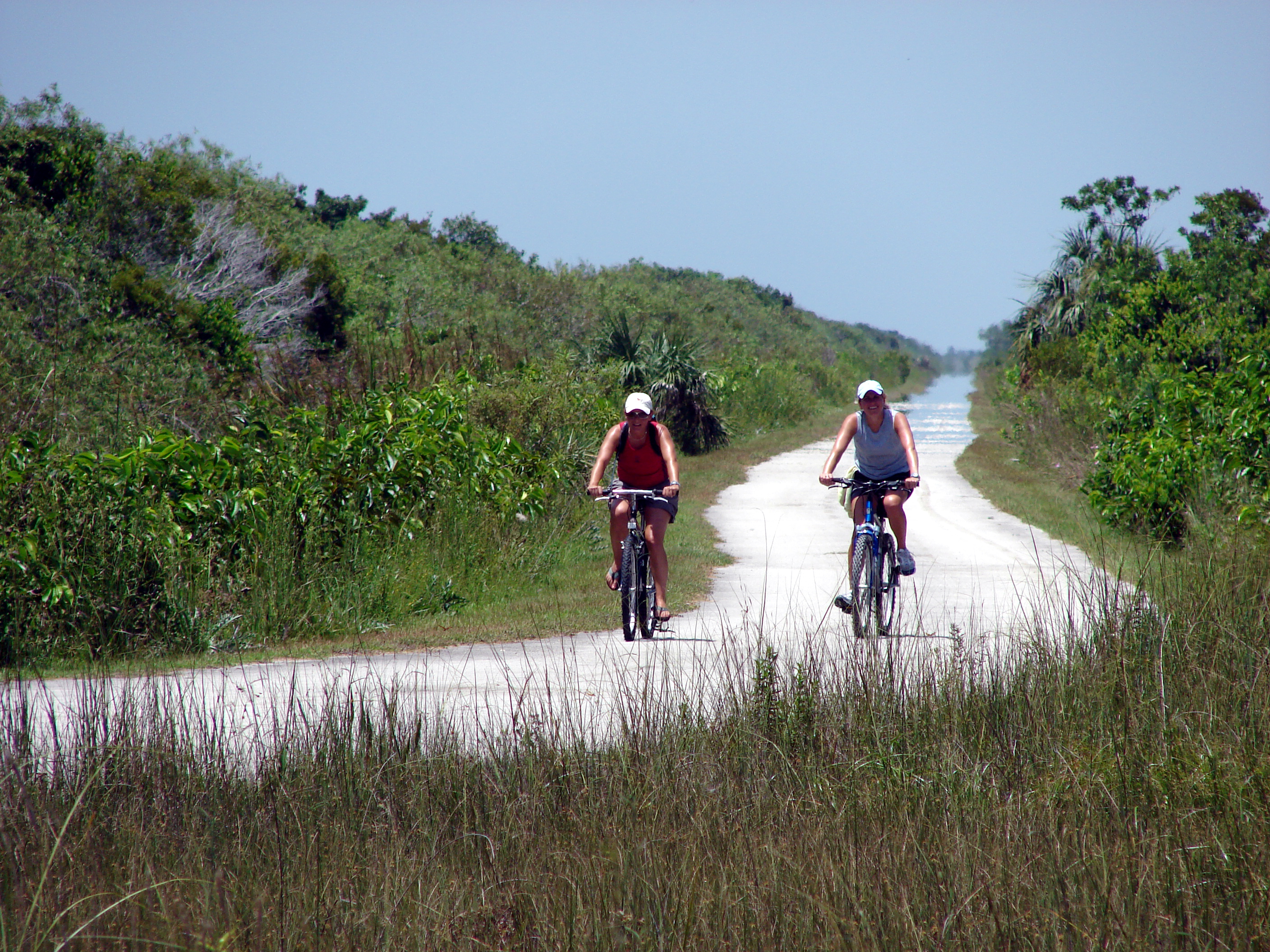
The Park has five biking trails throughout the park.
Everglades National Park has five biking trails throughout the park: Shark Valley Tram Road, Snake Bight Trail, Rowdy Bend Trail, Long Pine Key Nature Trail, and the L-67 Canal Road.
E-bikes with fully operable pedals and an electric motor of less than 750 watts (1 horse power) are permitted on trails and public roads where traditional bicycles are allowed. Speed limit is 10 miles per hour on all trails and 15 miles per hour on the Shark Valley Tram Road. Fully electric (no pedaling required) bicycles are only permitted on public roadways, the same as vehicles.
There are many hiking trails to explore at Everglades National Park.
Popular Trails at Everglades National Park
Pine Island Trails
Short Interpretive Trails:
Gumbo Limbo Trail
Pinelands Trail
Pa-Hay-Okee Overlook (now open!)
Mahogany Hammock Trail
Flamingo Trails
Short Interpretive Trails :
West Lake Trail
Snake Bight Trail
Rowdy Bend Trail
Christian Point Trail
Bear Lake Trail
Guy Bradley Trail
Bayshore Loop Trail
Coastal Prairie Trail
Hells Bay Canoe Trail Nine Mile Pond Canoe Trail
Shark Valley Trails
Otter Cave Hammock Walking Trail
Bobcat Boardwalk Walking Trail
Gulf Coast Trails
Sandfly Island hiking trail: The hiking trail is 0.9 miles, visitors should allow 40 minutes to complete. The surface is bare ground and the trail is not wheelchair accessible. The trail is located on Sandfly Island, 1.5 miles from the Gulf Coast Visitor Center site. Sandfly Island is only accessible by canoe/kayak or motorboat.
The following trails are passable, but not maintained, due to the presence of federally endangered species. Travel them at your own risk!
Coastal Prairie, Snake Bight, Rowdy Bend, Christian Point, and Bear Lake as they are critical habitat for Cape Sable thoroughwort .
Long Pine Key Bike Trail: Critical Habitat and presence of Florida leafwing and Bartram's scrub hairstreak butterflies and their host plants.
**Note** Pets are not allowed on any of the park's trails. To learn more about regulations on pets in the park, click here .
Learn about bird life in the park, why Everglades restoration is important for the park's birds, and more. View the list of bird species
The name Everglades has always been associated with birds . The warm, shallow, and vast River of Grass has attracted all types of birds to this region for thousands of years. In the 1800s, the well-known naturalist and artist, John James Audubon, wrote during a visit to south Florida:
"We observed great flocks of wading birds flying overhead toward their evening roosts .... They appeared in such numbers to actually block out the light from the sun for some time."
In Everglades National Park, more than 360 different species of birds have been sighted. Though there are many different ways to identify one group of birds from another, generally birds can be placed into one of three groups: wading birds, land birds, and birds of prey.
Bird Species List View the list of of bird species that have been sighted in the park.
From the earliest written accounts, the Everglades have been lauded as the stage from which yearly spectacles of avian life could be viewed. Amidst the life-giving waters of the River of Grass, immense flocks of countless birds quenched their thirst, satisfied their hunger, rested during lengthy migrations, and raised their young.
During the turn of the 20th century, the number of birds plummeted under pressure from both the plume trade and the alteration of the south Florida landscape. In fact, protecting this dwindling population was a major catalyst for the establishment of the national park.
Though the effort to restore the historic bird populations has been slow, Everglades National Park remains a popular destination for bird enthusiasts from around the world. More than 360 bird species have been recorded in the park and the list continues to grow. The Everglades remain one of the best destinations for easily observing high concentrations of many diverse species.
Sixteen different species of wading birds live in the Everglades. All have long legs for wading into the water to catch their food. The white Ibis is the most common wading bird found in the park. Unlike wading birds that prefer to eat fish, the ibis dines mostly on crayfish. This attractive white bird has a long, slender, curved beak that it uses to probe the mud in search of food. Ancient Egyptians believed the ibis to be the reincarnation of their God, Thoth, the God of Wisdom and Learning.
The wood stork is a larger wading bird than the ibis and has an unusual way of feeding. With its beak held in the water, the wood stork shuffles its feet. As a frightened fish swims away from its feet, it bumps into the bird's beak. The sensitive beak can feel the fish, and it clamps down on it within a fraction of a second. Some believe this movement to be the fastest of any organism in the Everglades. The wood stork was federally listed as an endangered species until June 2014, when its status was down-listed to threatened.
One of the most common herons you would encounter on a visit to the park would be the green-backed heron. A relatively small wading bird, the antics of this fisherman are fun to watch. Slowly stalking in shallow water, or hanging from a low tree branch, its dart-like jab at a fish is rarely off target.
Other wading birds you may encounter on a visit include the great white heron, great blue heron, great egret , snowy egret, tri-colored heron, little blue heron, cattle egret, reddish egret, black-crowned night heron, yellow-crowned night heron, least bittern, glossy ibis, and the very colorful roseate spoonbill .
Additional Bird Resources
Bird Watching in the Park Learn about where to see birds in the park, why Everglades restoration is important for the park's birds, and more.
Checklist of Birds View our list of birds here
Bird Species Spotlight Learn more about one of our most colorful wading birds; the Roseate Spoonbill!
Bird Illustrations and More
The vibrant, detailed nature illustrations on this page and others are by NPS volunteer and artist Kathleen Konicek-Moran. Kathleen has graciously allowed Everglades National Park to use her original works to help convey the vital connections inherent within the Everglades ecosystem. Learn more about Kathleen Konicek-Moran and what inspires her bountiful flow of creativity.
Observing wild animals in their natural environment is a privilege. It is your responsibility to keep wildlife wild by being respectful.
Everglades National Park is renowned for its vast and unique ecosystem, where its sprawling wetlands and diverse wildlife take center stage. Unlike parks defined by towering peaks, the Everglades is a low-lying wonder, with its highest point just 8 feet above sea level. Established as a national park to preserve its unparalleled biodiversity, the Everglades is home to 36 threatened or endangered species, including the American alligator and Florida panther, alongside over 350 species of birds, 40 species of mammals, and a rich array of reptiles and fish.
Explore the sections below to learn more about the wildlife that thrive within this extraordinary sanctuary.
Wildlife Safety & Viewing Ethics
Observing wild animals in their natural environment is a privilege. It is your responsibility to keep wildlife wild by being respectful of the animals and their habitat.
Many of the best-known Everglades residents fall within this fascinating class of animals.
Learn about bird life in the park, why Everglades restoration is important for the park's birds, and more. View the list of bird species
Learn about the turtles, frogs, and other species of amphibians that live in the park.
Learn about fish that live in the park.
Learn about some of the smaller species of wildlife that inhabit the park.
Official NPS features and USGS park boundaries, imported 2026-10-17. An inventory snapshot, not live trail or parking availability.
Loading official park features…
TrailsPoints of interestParkingZoom with buttons or pinch. Toggle layers on the map.
Map coverage varies. Trail names may represent segments, connectors, or shared park units; mapped lines are not a hiking recommendation. Use official conditions and navigation resources before heading out.
Anhinga Trail Inventory record · 1 source segments; not a route distance.
Wood
Non-Motorized
Bear Lake Canoe Trail Inventory record · 1 source segments; not a route distance.Due to minimum maintenance, trail may be impassable.
Water
Non-Motorized Watercraft
Bear Lake Trail Inventory record · 1 source segments; not a route distance.During the wet season, access to hiking trails in the park may be limited in areas that become submerged.
Earth
Non-Motorized
Bobcat Boardwalk Inventory record · 1 source segments; not a route distance.
Christian Point Trail Inventory record · 1 source segments; not a route distance.During the wet season, access to hiking trails in the park may be limited in areas that become submerged.
FLBL Bear Lake Canoe Trail Inventory record · 1 source segments; not a route distance.During the dry season, access to canoe trails in the park may be limited due to low water levels.
FLMR Snake Bight Tram Trail Inventory record · 1 source segments; not a route distance.During the wet season, access to hiking trails in the park may be limited in areas that become submerged.
Earth
Non-Motorized
Page 1 of 4
NPS public GIS inventory, imported 2026-10-17. “Existing” is an inventory classification, not confirmation that a trail is open. Segment counts are not route distances. Parking records do not indicate space availability, fees, or accessibility certification. View government source ↗
Climate for Homestead, 48 km from the park reference point. 1991–2020 normals. Source elevation: 1 m.
Daytime highNighttime lowOctober: 85° / 74°
Daytime high85°
Precipitation101 mm
Daylight11.4 hrs
Wind11.9 km/h
Mountain, rim, valley, and coastal conditions can differ sharply from the source town. Check park forecasts and current conditions before travel.
Monthly climate data 12 months · °F
Month
High
Low
Rain / snow water
Wet days
Daylight
75°
61°
35 mm
5.7
10.6 h
77°
62°
33 mm
5.8
11.1 h
80°
65°
40 mm
6.2
11.8 h
83°
69°
50 mm
7.7
12.6 h
85°
73°
95 mm
13.1
13.2 h
87°
77°
185 mm
23.7
13.6 h
88°
78°
149 mm
24.7
13.4 h
89°
78°
176 mm
25.7
12.9 h
87°
77°
171 mm
23.2
12.2 h
85°
74°
101 mm
15.0
11.4 h
80°
68°
38 mm
6.8
10.8 h
77°
64°
31 mm
5.5
10.4 h
RESEARCH WITH THE SOURCE IN VIEW
The practical field guide.
Official NPS excerpts imported 2026-10-17. Fees, permits, road access, and operations can change; use the source link to confirm the latest information.
It is important to know that the Everglades has two very distinct seasons: dry season and wet season.
Although it varies from year to year, dry season is typically December through April and wet season lasts from May to November. Dry season is also the busy season because of the warm winters that attract the largest variety of wading birds and their predators. Wet season is rainy and can produce a lot of mosquitoes. Because of the reduced visitation during the rainy summer season, many ranger-led programs are not available, but other guided tour options remain available. Please check the calendar for the current schedule of ranger programs or contact the individual guided tour operators .
The Everglades spans across 1.5 million acres that stretches over the southern part of Florida, but it easy to access the park’s three main areas. The northern section of the park is accessible via Miami or Everglades City, the southern section is accessible through Homestead.
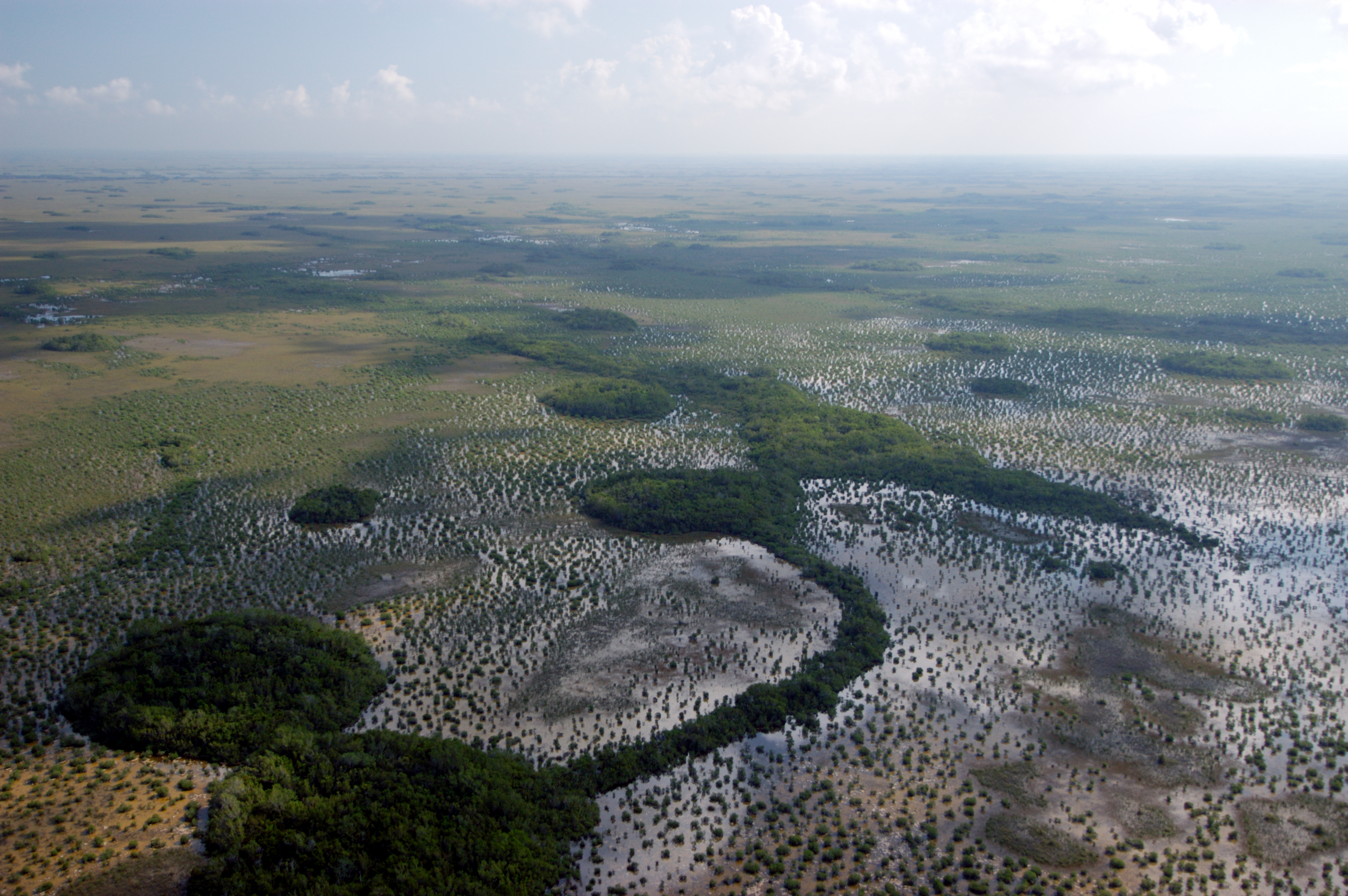
Visiting the Everglades allows you to explore a vast diversity of flora and fauna in different eco-systems: freshwater sloughs, marl prairies, tropical hammocks, pinelands, cypress, mangrove, coastal lowlands, marine, and estuarine. There is a lot of area to discover at the Everglades, so it is vital to be prepared.
Physical Address
Everglades National Park has several main entrances, each providing access to different areas of the park.
Find the entrance that is right for you.
Operating Hours & Seasons
Visitor Centers
Internet & Cellular Access
Internet & Cellular Access Details
National Park Service Mobile App This app is a great tool for planning your trip, then it can be used as a guide during your visit. You can download the maps and content from Everglades National Park for offline use. It’s especially handy if you’re exploring remote areas or concerned about data limits. Free and available now.
Lost & Found If you have lost an item during your visit, please complete the Lost and Found form. Providing detailed and accurate information helps staff match your report with recovered items. If a matching item is not found, you will not be contacted further. For follow-up questions, please contact park headquarters during business hours at (305) 242-7740.
To report a lost item please click here.
Visiting in the Wet Season
Planning a trip to the park May - November? Make the most of your visit during the wet season!
Visiting in the Dry Season
Planning a trip to the park Dec - April? The dry season is the most popular time to visit!
Everglades National Park offers wonderful camping opportunities in both the frontcountry and the wilderness backcountry
Frontcountry Camping
Flamingo Campground
Campground Features
Fire/Stove Policy
Operating Hours & Seasons
Contact Information & Directions
Phone number (Voice)
Mailing Address
Physical Address
Additional Information & Regulations
Additional Information
Cell Phone Additional Information
Internet Additional Information
Long Pine Key Campground
NPS / Jane Gamble
Wilderness Camping
There are a number of ground sites, beach sites, and elevated camping platforms ("chickees") available in various locations in the park. Most wilderness camping sites are accessible by canoe, kayak, or motorboat, though a few may be reached by hikers. A wilderness camping permit is required for all wilderness campsites and issued the day before or day of your trip either online or at the Flamingo Visitor Center. Preparation is extremely important for a successful trip. Trip planning information can be found here. Starting January 2, 2023, all Marjory Stoneman Douglas Wilderness campsites will only be available for advanced reservations on Recreation.gov. There will no longer be campsites held as "walk-up." Campsites will be open for reservations 90 days in advance. Rangers can still assist campers in booking an unreserved site on the day of their trip. This change allows campers to independently plan their wilderness camping itinerary. It also removes the need to travel to the visitor center to purchase "walk-up" sites. For questions about the Flamingo District please contact the Guy Bradley Visitor Center. For the Gulf Coast District, please call 305-242-7700.
Everglades National Park strives to make the park accessible to everyone. The park offers a variety of accessible facilities, services and programs including back country camping, front country camping, boat tours, and assistive learning devices. The following pages will provide guidance on accessibility throughout the park.
Visitor Information through TDD is available at 305-242-7740
Get an entrance pass You may enter the park with a Standard , Annual , or America the Beautiful Pass . The fee for a Standard entrance pass is $20.00–$35.00. Non-US residents (16 and over) must pay an additional $100 per person fee unless admitted with an Annual or America the Beautiful Pass. Help me choose an entrance pass
You may enter the park with a Standard , Annual , or America the Beautiful Pass .
The fee for a Standard entrance pass is $20.00–$35.00.
Non-US residents (16 and over) must pay an additional $100 per person fee unless admitted with an Annual or America the Beautiful Pass.
Plan to go cashless This park does not accept cash.
Choosing an Entrance Pass
Do you have or qualify for a discounted America the Beautiful Pass?
If you already have an America the Beautiful—the National Parks and Federal Recreational Lands Pass, that's the only entrance pass you need. Seniors, military, visitors with a permanent disability, and families with a 4th grader are eligible for a free or discounted America the Beautiful pass.
America the Beautiful Pass
How often do you plan to visit national parks in the next 12 months?
If you don't qualify for a discounted America the Beautiful pass, we recommend choosing an entrance pass based on your trip plans.
Entrance Passes
This Everglades National Park annual pass is valid for 12 months from the date of purchase and is good for unlimited visits to the park.
Nonresident Fees
Standard Entrance Pass
Non-US residents must pay a $100 per person fee in addition to the standard entrance pass fee. More about nonresident fees
If you enter the park in a motorized vehicle, your entrance pass covers both you and your passengers. Your passengers do not need a separate pass.
Costs for vehicles with more than 15 passengers are listed below under Organizations and Businesses .
Private Vehicle $35.00
In-person Purchase Locations
Everglades Homestead Entrance Station Credit/Debit Only
Shark Valley Entrance Station Credit/Debit Only
Marjory Stoneman Douglas Visitor Center (Gulf Coast) Credit/Debit Only
Motorcycle $30.00
For Individuals without a Vehicle
If you enter the park on a bicycle or on foot and are at least 16 years old, you need your own entrance pass. Children under the age of 16 don't need an entrance pass.
Per Person $20.00
Good for 7 consecutive days at all park entrances. Admits one individual hiker, bicyclist, pedestrian, or human-powered paddlecraft, when not arriving in a vehicle or vessel. Individuals 15 years old and younger, are admitted free of charge.
For Organizations & Businesses
Education/Academic Group $0.00
All accredited educational and scientific institutions are eligible to receive free entrance to the park. Bringing your classroom to the park can present many unique learning opportunities and novel ways for your students to advance their studies. The Federal Lands Recreation Enhancement Act (FLREA), Public Law 108-447, provides the National Park Service statutory authority to allow “outings conducted for non-commercial educational purposes by schools or bona fide academic institutions.” More information
Commercial Motor Coach (26+ seats) $300.00
Commercial Mini-bus (16-25 seats) $200.00
Commercial Van (7-15 seats) $125.00
Annual Entrance - Park
The Everglades Annual Pass admits the pass holder, passenger on one motorcycle, or passengers of a single vehicle or vessel to Everglades National Park.
US citizens and residents
America the Beautiful—the National Parks and Federal Recreational Lands Pass
Covers entrance fees and standard amenity (day-use) fees at lands managed by
National Park Service
US Fish & Wildlife Service
US Forest Service
Bureau of Land Management
Bureau of Reclamation
US Army of Corps of Engineers
Depending on the type of entrance fee charged at a site, covers One private vehicle fee or Four per person fees
America the Beautiful Passes are non-refundable, non-transferable and cannot be replaced if lost or stolen . Passholders must show valid photo identification (ID) with each pass.
How to Get an America the Beautiful Pass
Physical passes can be purchased or picked up at over 1,000 federal recreation sites.
Purchase and pickup locations
To receive your pass by mail, order online at the USGS Online Store . Online orders are for physical passes, not digital passes, and may take up to three weeks to be processed and delivered. Order receipts may not be used in place of a physical pass. We recommend ordering at least three weeks in advance of your visit, or picking up a pass in person instead.
Skip the wait! Get a Digital America the Beautiful Pass through recreation.gov. Your digital pass can be saved to a mobile device and used immediately.
Get a Digital America the Beautiful Pass
Each non-US resident aged 16 and older visiting Everglades National Park must pay a $100 nonresident fee (in addition to the standard entrance fee), unless admitted with an Annual or America the Beautiful Pass. This includes nonresidents entering as part of a commercial tour group, commercial use authorization (CUA) group, or concessioner tour group.
More about nonresident fees
2026 Free Entrance Days in the National Parks
Come experience the national parks! All National Park Service sites that charge an entrance fee will offer free admission to US citizens and residents (other fees, including timed entry or reservation fees, may apply). Mark your calendar for these entrance fee-free dates:
February 16 : Presidents Day (Washington's Birthday)
May 25 : Memorial Day
June 14: Flag Day/President Trump's birthday
July 3–5: Independence Day weekend
August 25: 110th Birthday of the National Park Service
September 17: Constitution Day
October 27 : Theodore Roosevelt's birthday
November 11: Veterans Day
All park visitors are required to pay an entrance fee. Money collected is used to directly improve visitor experiences and assist with the cost of providing safe, meaningful experiences to park visitors. Pre-paid digital passes may be purchased online before entering the park and displayed on a mobile device or printed out for display at the fee station. Entrance passes may also be purchased at the following park entrance stations:
Entrance passes are non-transferable.
Digital passes or credit/debit cards are the ONLY method of payment at all fee collection areas. Learn about why and how fee dollars benefit the park.
Academic Fee Waivers
All accredited educational and scientific institutions are eligible to receive free entrance to the park. Bringing your classroom to the park can present many unique learning opportunities and novel ways for your students to advance their studies. The Federal Lands Recreation Enhancement Act (FLREA), Public Law 108-447, provides the National Park Service statutory authority to allow “outings conducted for non-commercial educational purposes by schools or bona fide academic institutions” to obtain a waiver of park entrance fees. Commercial enterprises are not eligible for fee waivers, but school groups using a commercial vehicle for transportation only may apply for a fee waiver. The entrance fee waiver does not entitle groups to any special ranger presentations. Organizations that are generally considered service, civic, or fraternal (e.g. Scouting, Rotary, faith-based organizations, clubs, etc.) do NOT qualify for the academic fee waiver unless they meet the requirements. Fee waivers do not apply to camping or permit fees. Groups that do not qualify for an educational fee waiver will be charged the appropriate entrance fee and may be considered as a non-commercial organized group. Applications must be submitted to the Special Use Permit Office, two weeks prior to the anticipated date of visit.
Academic Fee Waiver Application
I'm visiting...
We recommend
This park, once
Standard Pass
This park, multiple times
Annual Pass
More than one national park or federal recreation site
America the Beautiful Pass
Type
Available to
Price
Resident Annual Pass
US citizens and residents
$80.00
Non-Resident Annual Pass
Non-US residents
$250.00
Senior Annual Pass
US citizens and residents 62+ years old
$20.00
Senior Lifetime Pass
US citizens and residents 62+ years old
$80.00
Military Annual Pass
Current US military and dependents
Free
Military Lifetime Pass
Gold Star Family members and veterans
Free
Access Pass
US citizens and residents with permanent disability
Free
4th Grade Pass
US 4th graders
Free
Volunteer Pass
Federal recreation site volunteers with 250 service hours
Free
I'm visiting...
We recommend
This park, once
Standard Pass
This park, multiple times
Annual Pass
More than one national park or federal recreation site
America the Beautiful Pass
Type
Available to
Price
Resident Annual Pass
US citizens and residents
$80.00
Non-Resident Annual Pass
Non-US residents
$250.00
Senior Annual Pass
US citizens and residents 62+ years old
$20.00
Senior Lifetime Pass
US citizens and residents 62+ years old
$80.00
Military Annual Pass
Current US military and dependents
Free
Military Lifetime Pass
Gold Star Family members and veterans
Free
Access Pass
US citizens and residents with permanent disability
Free
4th Grade Pass
US 4th graders
Free
Volunteer Pass
Federal recreation site volunteers with 250 service hours
Unlike most National Parks, Everglades National Park has three entrances in 3 different cities.
Everglades National Park has a total acreage of 1,509,000 acres in Miami Dade County, Monroe County and Collier County. Please note, these entrances are not interconnected. A car is needed at the Everglades because distances are long and there is no public transportation that travels within the park. Each of the three entrances and the interior Flamingo Visitor Center are at least a one-hour drive apart from one another.
Traffic & Travel Tips
Allow Plenty of Travel Time
The Main Park Road from the Homestead entrance has narrow shoulders and pulloffs, and individual parking areas at interpretive trails and waysides. The maximum speed limit is 45 to 55 mph in most areas. Allow plenty of travel time during your visit.
Plan for Busy Winter Weekends
On busy weekends in the winter, the Homestead and Shark Valley entrances can become extremely congested. Long lines can form at the entrance gates, and it can be difficult or impossible to find parking at the visitor centers of these entrances. It is recommended to visit these areas on weekdays, arrive early in the day (before 10 AM), and carpool to the park if possible. Purchasing digital entrance passes ahead of your visit can help reduce your wait time at the entrance gates.
Note to Visitors Arriving By On-Demand Ride Service (Uber, Taxi or Lyft)
Due to the remoteness of this area we are finding that visitors arriving by "on-demand" transportation services are unable to acquire return transportation on those services. We suggest checking with your driver for return arrangements or have an alternative taxi option. There is no other public transportation to the park.
Park Entrances & Visitor Centers
Select an entrance below for addresses, GPS coordinates, and driving directions.
Homestead Entrance
This is the main entrance for Everglades National Park. The Ernest F. Coe Visitor Center is located at this entrance, as well as access to Royal Palm and Flamingo .
Physical Address
40001 State Road 9336, Homestead, FL 33034
Approximate GPS Coordinates
25°23'42.97 N 80°34"59.36 W
Directions to Ernest F. Coe Visitor Center From Miami
Take the Florida Turnpike (Route 821) south until it ends, merging with U.S. 1 at Florida City. Turn right at the first traffic light onto Palm Drive (State Road 9336/SW 344 St.) and follow the signs to the park.
Homestead Trolley Service
Public transportation to and from the Ernest F. Coe Visitor Center and Royal Palm is seasonally available through the City of Homestead trolley service, from approximately December through April. This is the only public transportation offered to anywhere inside of the park. Schedules are subject to change.
Schedules and reservations can be found at the City of Homestead website: Homestead Trolley to the National Parks
The Shark Valley Visitor Center is the entrance closest to the Greater Miami Area, Florida.
36000 SW 8th Street Miami, FL 33194
25°45'.60" N 80°46'01.01 W
Directions to Shark Valley Visitor Center From Miami
From the Florida Turnpike, get off on exit 25A (from the north) or exit 25 (from the south) take U.S. 41 (Tamiami Trail / SW 8th St.) 25 miles west to Shark Valley.
Directions to Shark Valley Visitor Center From Naples
Take U.S. 41 (Tamiami Trail / SW 8th St.) approximately 70 miles east to Shark Valley.
Everglades City Entrance
The Marjory Stoneman Douglas Visitor Center , located in Everglades City, is the entrance closest to Naples, Florida.
815 Oyster Bar Lane, Everglades City, FL 34139
25°50'49.03" N 81°23'06.85" W
Directions to the Gulf Coast Visitor Center From I75 (Alligator Alley)
Take exit 80 (State Road 29) turn south and proceed 20 miles to Everglades City. Once in Everglades City, follow the signs to the park. The visitor center is located on the righthand side of the road.
Directions to the Gulf Coast Visitor Center From Shark Valley Visitor Center
Drive west on U.S. 41 (Tamiami Trail) for 40 miles, then turn left on County Road 29 and proceed approximately 3 miles to Everglades City. Once in Everglades City, follow the signs to the park. The visitor center is located on the righthand side of the road.
Directions to the Gulf Coast Visitor Center From Naples
Take U.S. 41 (Tamiami Trail) east toward Miami for approximately 35 miles to County Road 29, then turn right and proceed approximately 3 miles to Everglades City. Once in Everglades City, follow the signs to the park. The visitor center is located on the righthand side of the road.
Flamingo Visitor Center
The Flamingo Visitor Center is the southernmost visitor center in Everglades National Park and is the only one of the four visitor centers that is not at an entrance. It is at the end of the Main Park Road and is accessible from the Main Park (Homestead) entrance.
1 Flamingo Lodge Highway, Flamingo, FL 33034
25°08'28.96" N 80°55'25.73" W
Directions to the Flamingo Visitor Center From the Main Park Entrance
Drive south for 38 miles to the Flamingo Visitor Center.
Coastal access point with the marina, boat tours, campgrounds, houseboats, and the Flamingo Lodge.
Explore mangrove waterways, boat tours, and remote backcountry routes.
Trails, observation tower, tram tours and wildlife.
Plan your trip - as south Florida's subtropical climate brings significant seasonal changes.
Due to these dramatic changes in weather during each year, we encourage you to read about and prepare appropriately when visiting this very special place during the Dry Season and the Wet Season .
Important Safety Precautions
Please keep in mind personal physical fitness levels of all in your party and consider any limitations when planning your outdoor activities including hiking, biking, or paddling in the Everglades.
If you or anyone from your group is not from Florida and unfamiliar with the sub-tropical environment and terrain, they should be aware that it can be very hot and humid, especially in the summer.
Please familiarize yourself with the trails before hiking, biking, or paddling.
You should know how long the trail is and the approximate time it takes to do a certain trail. In addition, you should let someone know your plans so that if you are gone too long and become lost the park can better assist any needs. Ask a park ranger or park volunteer, if unsure where to find this information.
Bring water (especially in the summer), insect repellent (summer and if you will be in or around heavy vegetation), sunscreen, and proper clothing for the activity you will be doing.
Learn more about outdoor activities to participate in by visiting our "Things to Do" page here .
Please keep small children close and under supervision, especially around wildlife and bodies of water. The park is a wild and natural area, and animals move about freely. Exercise even more caution at night.
If traveling with your pet, please be aware that pets are not allowed on most trails in the park.
Avoid leaving your pet in a parked car due to high temperatures. Wildlife, such as alligators and crocodiles, may perceive animals like small dogs as prey. Protect yourself and your pet by keeping them on a leash in parking lots and other designated areas away from wildlife. For the health and safety of your pet, consider leaving them at home or boarding them at an appropriate facility while you visit the park.
Learn more about bringing pets by visiting our "Pets" page here.
Do not feed any wildlife that you encounter, including birds.
Feeding wildlife of any kind will eventually make the animal aggressive and is illegal. Alligators and crocodiles that are fed by humans begin to associate humans with food and can become aggressive.
Mosquitoes are plentiful especially at certain times of the year.
Protect yourself from bites and mosquito-borne diseases by wearing long sleeves and pants and/or using insect repellent. For fewer mosquitoes, avoid the shade and walking through grassy areas. Mosquitoes are more prevalent on overcast days and at dusk and dawn, especially during the summer. While the Aedes species of mosquitoes that carry the Zika virus do live in South Florida, they are more prevalent in urban areas.
Additional information on Zika
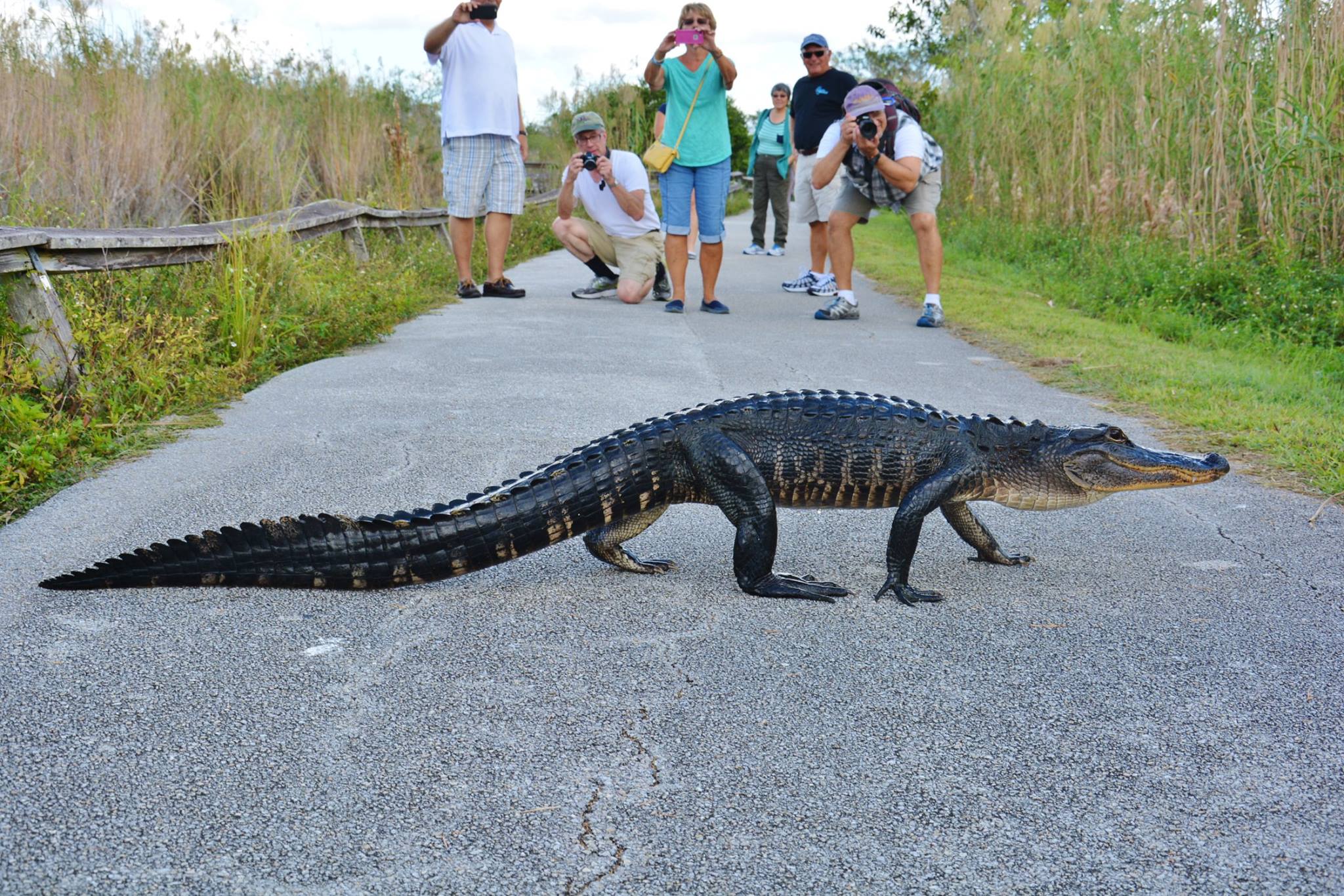
Crocodilians are one of the reasons people visit the park, however, these are wild animals that can be dangerous to humans. Keep a safe and respectable distance of at least 15 feet.
If an animal is hissing, you are too close, even if it is more than 15 feet. Alligators and crocodiles are more active at night and do most of their hunting from dusk to dawn. Although they may look like a statue at times, they are alive and alert and can react lightning fast. Touching an alligator is never a good idea. Feeding or harassing an animal, including throwing objects at it, is a criminal offense that carries a fine. Any action that alters the natural behaviors of an animal is harassment.
The park's ecosystems support a variety of plant life including some that cause reactions to human skin.
Poison ivy which can grow as a plant, vine, or shrub is common especially in sunny patches of forested areas. Poisonwood is a tree or shrub found mainly in the pine rocklands and hardwood hammocks. Physical contact with these plants may cause a skin rash. Burning these plants can cause significant damage to the airway.
Warning - Vultures May Damage Vehicles
Vultures are attracted to the rubber on vehicles and have been know to cause severe damage to windshields, sun roofs, and windshield wipers. Vultures are a federally protected migratory species and may not be harmed.
Sandfly Island hiking trail: The hiking trail is 0.9 miles, visitors should allow 40 minutes to complete. The surface is bare ground and the trail is not wheelchair accessible. The trail is located on Sandfly Island, 1.5 miles from the Gulf Coast Visitor Center site. Sandfly Island is only accessible by canoe/kayak or motorboat.
The following trails are passable, but not maintained, due to the presence of federally endangered species. Travel them at your own risk!
Coastal Prairie, Snake Bight, Rowdy Bend, Christian Point, and Bear Lake as they are critical habitat for Cape Sable thoroughwort .
Long Pine Key Bike Trail: Critical Habitat and presence of Florida leafwing and Bartram's scrub hairstreak butterflies and their host plants.
**Note** Pets are not allowed on any of the park's trails. To learn more about regulations on pets in the park, click here .
Pets are Allowed in Limited Areas in Everglades National Park
Due to the concern for wildlife management issues, Everglades' regulation allows the closing of an area to the use of pets and service animals , if it is determined that these pose a direct threat to the health or safety of people or wildlife. Pets present in areas not permitted open themselves to predation by wildlife, as well as posing a significant danger to the handler and other visitors.
Where Can I Bring my Pet?
Pets must be kept on a leash (maximum of 6 feet in length) at all times. Do not leave pets unattended. Please pick up after your pet and dispose in a sealed container.
Pets are permitted in the following areas:
Roadways open to public vehicular traffic
Roadside campground and picnic areas
Maintained grounds surrounding public facilities and residential areas
Pets not permitted in the following areas:
All trails - boardwalk, paved and unpaved
Shark Valley Tram Trail/Road
Service Animals
To learn more about bringing a service animal to the park, visit the Service Animals in National Parks page .
For additional information call the general park information phone 305-242-7700 or read the Everglades Compendium listing current park-wide laws and policies.
The characteristic four seasons of the continental United States give way in south Florida to only two seasons: wet and dry . South Florida's subtropical climate is characterized by warm, humid, rainy summers and mild, dry, pleasant winters with periodic incursions of cool air. Check out the weather for the following areas of the Everglades:
Flamingo marina, campground, and Visitor Center
Shark Valley Entrance - Shark Valley Visitor Center and Shark Valley Loop Road
Everglades City Entrance - Gulf Coast Visitor Center
Homestead Entrance - Ernest F. Coe Visitor Center and Royal Palm
Summer: The Wet Season
NPS photo by Lori Oberhofer
Although summers are hot and humid, the high temperatures are tempered by frequent thunderstorms. The summer wet season extends from about mid-May to November, with temperatures ranging into the low 90s (30 to 35 degrees Celsius). The majority of the year's average annual rainfall (nearly 60 inches, or 152 cm) falls during the wet season. Continental cold fronts generally cannot penetrate as far south as south Florida during the summer, so warmth and humidity build. Thunderstorms arise when warm, moist air masses combine with an unstable atmosphere. Thunderstorms can be as brief as a few minutes or as long as several hours. As cooler air glides inland from the Gulf of America and Atlantic Ocean, thunderstorms can erupt along sea-breeze fronts. At times, these thunderstorms can be an almost daily occurrence. Sometimes these storms move very slowly, enabling them to drop several inches of rain. The largest amounts of rainfall typically are associated with tropical storms and hurricanes.
Learn about visiting during the wet season.
Park visitors need to be aware of the heat index , which is a measure of how hot it feels. Other names for the heat index include the felt air temperature or apparent temperature. The heat index combines air temperature and relative humidity in an attempt to determine the human-perceived equivalent temperature. For example, for a temperature of 90 degrees F (32 degrees C) experienced under very high humidity, the heat index is about 105 degrees F (41 degrees C). The human body normally cools itself by perspiration, or sweating. Evaporation of that sweat removes heat from the body; however, relative humidity reduces the evaporation rate because the higher moisture content of the surrounding air inhibits evaporation. The lower heat removal rate from the body results in the sensation of feeling overheated. The effect is subjective, and its measurement is based on descriptions of how hot subjects feel for a given temperature and humidity. Visitors are advised to consider the heat index when planning activities in the park.
The Atlantic hurricane season officially begins on June 1 and ends November 30. Hurricanes are a violent type of tropical cyclone that forms over warm ocean waters, typically beginning as storms in the Caribbean or off the west coast of Africa. As they drift, they are fueled by the warm waters of the tropics. Warm, moist air moves toward the center of the storm, spirals upward, and is released as torrential rains. The cycle of strengthening ends only when contact is made with land or cooler water and the supply of moisture is cut off. Situated in south Florida, Everglades National Park lies within one of the most active hurricane areas of the United States. Visitors should be aware that all or part of the park may be closed before, during, and after severe weather events. For the latest on park status and operations, please contact the main switchboard at 305-242-7700 or check our current conditions
Satellite image courtesy of NOAA
By definition, a tropical cyclone is a rotating, organized system of clouds and thunderstorms that originates over tropical or subtropical waters and has a closed low-level circulation. Tropical cyclones rotate counterclockwise in the Northern Hemisphere. They are classified as follows:
Tropical Depression: A tropical cyclone with maximum sustained winds of 38 mph (33 knots) or less.
Tropical Storm: A tropical cyclone with maximum sustained winds of 39 to 73 mph (34 to 63 knots).
Hurricane: A tropical cyclone with maximum sustained winds of 74 mph (64 knots) or higher. In the western North Pacific, hurricanes are called typhoons; similar storms in the Indian Ocean and South Pacific Ocean are called cyclones. The Saffir-Simpson Hurricane Wind Scale is a 1 to 5 rating based on a hurricane's sustained wind speed. This scale estimates potential property damage. Hurricanes reaching Category 3 and higher are considered major hurricanes because of their potential for significant loss of life and damage. Category 1 and 2 storms are still dangerous, however, and require preventive measures.
Major Hurricane : A tropical cyclone with maximum sustained winds of 111 mph (96 knots) or higher, corresponding to a Category 3, 4, or 5 on the Saffir-Simpson Hurricane Wind Scale.
Winter: The Dry Season
NPS photo by Sarah Zenner
The winter dry season extends from about December to mid-May, with temperatures ranging from the low 50s to upper 70s (12 to 25 degrees Celsius) and low humidity. Continental weather fronts occasionally bring near-freezing temperatures to south Florida. Often-breezy winter weather conditions can create a wind chill factor that makes perceived temperatures feel considerably cooler than what the thermometer reads. South Florida receives only about one quarter of its average yearly rainfall during the winter dry season. From late fall through early spring, continental cold fronts periodically plunge southeastward through the state, sweeping away any warm, humid air. Cool, dry air stabilizes the atmosphere, suppressing any showers and thunderstorms. Any rain associated with these frontal passages typically arrives in the form of squall lines that sweep through so quickly that they have little opportunity to drop substantial amounts of rain.
Learn about visiting during the dry season.
Average Weather Conditions
The following table provides monthly averages for temperature and precipitation in the Royal Palm area, which is near the main entrance to the park and the Ernest Coe Visitor Center .
Data source: Southeast Regional Climate Center .
Average Maximum Temperature
Average Minimum Temperature
Average Precipitation
The Difference between Weather and Climate
The difference between weather and climate is a measure of time. Weather is what conditions of the atmosphere are over a short period of time, and climate is how the atmosphere "behaves" over relatively long periods of time. Climate change refers to changes in long-term averages of daily weather. Latitude and the large amount of water contained in lakes, streams, canals, wetlands, and estuaries are the primary factors that affect the climate of south Florida. Proximity to the warm, oceanic currents of the Atlantic Ocean and Gulf of America also plays an important role.
Images courtesy of Steve Albers, NOAA
During the 1800s, local fishermen on the Pacific coast of South America began noticing a warm ocean current. The warm water arrived around Christmastime each year. Referring to the birth of Christ, they named this current El Niño, which means "the boy" in Spanish. El Niño is now known to be much more than just a local current off the coast of Peru. An El Niño condition is when surface water in the Pacific, near the equator, becomes warmer and the winds blow weaker than normal from the east. The opposite condition, when the water is colder than average and winds are blowing stronger from the east, is called La Niña. El Niño and La Niña episodes typically occur every 3 to 5 years. These interactions of the ocean and atmosphere produce important consequences for people and ecosystems in many parts of the globe.
Weather patterns in many parts of the world are influenced by El Niño and La Niña. Humans and ecosystems can be positively and negatively affected. During the fall through spring, El Niño typically causes increased rainfall and sometimes destructive flooding across the southern parts of the United States. During the same seasons, La Niña typically causes drier weather in the southern United States and colder and wetter weather in the Northwest. Even though El Niño occurs in the Pacific, it often reduces the number of hurricanes that form in the Atlantic. Conversely, La Niña episodes tend to increase the number of hurricanes in the Atlantic.
The Influence of Dust on Weather and Climate
Satellite image courtesy of NASA
African dust blown across the Atlantic Ocean by winds has been affecting air quality and producing striking sunsets in south Florida for ages. NASA scientists recently discovered that tiny particles of dust originating in the Saharan Desert affect the size of a thunderstorm's anvil (top), the strength and number of warm updrafts, and the amount of rain that builds up and falls from convective (heat generated) thunderstorms in Florida. When Saharan dust is in the air, the thunderstorm anvils created by Florida's convective thunderstorms tend to be a little smaller in area, but they tend to be better organized and thicker. This affects the amount of incoming sunlight and warmth reaching the ground, which can have effects on long-term climate. The amount of airborne dust increases during periods of drought in Africa.
NPS photo by Timothy Taylor
Volcanic ash that is spewed into the stratosphere by erupting volcanoes around the globe has a similar effect on air quality and climate. In the form of dust and aerosols, the finer particles remain aloft for years and spread around the world, scattering light and helping to produce the vivid, picture-perfect sunrises and sunsets that Florida is famous for.
Plan Your Visit >> Things To Do >> Outdoor Activities >> Hiking Trails >> Current Page
Anhinga Trail (walk) The Anhinga Trail is one of the premiere wetland trails in the National Park Service. It winds through Taylor Slough and the sawgrass prairie. It offers excellent nature viewing experiences year round, but especially during the winter or the dry season. During the dry season, the alligators and the anhingas are breeding and a shrinking Taylor Slough concentrates the wildlife. You can explore this trail on your own or with a ranger-led program.
Gumbo Limbo Trail (walk) This self-guiding, paved trail meanders through a shadded, jungle-like hammock of gumbo limbo trees ( Bursera simaruba ), royal palms ( Roystonea elata ), ferns, and air plants.
Long Pine Key Trails (hike) This trail offers visitors the opportunity to explore pine rockland, prairie and tropical hardwood hammock habitats. This trail runs west from Long Pine Key campground to Pine Glades Lake along the main park road.
Pineland Trail (hike) This short, paved loop trail is 2 miles west of the Long Pine Key turnoff on the main park road. It traverses pine rockland habitat. The pinelands are the most diverse habitat in the Everglades, consisting of an open South Florida slash pine forest with an understory of subtropical plants. Wheelchair accessible.
Pa-Hay-Okee Overlook (walk) Be sure to bring your camera to this elevated wood boardwalk which leads to an overlook. This raised observation platform on this boardwalk loop provides sweeping vistas of the "river of grass." Wheelchair accessible.
Mahogany Hammock Trail (walk) This self-guiding boardwalk trail meanders through a dense, jungle-like hardwook "hammock." Lush vegetation includes gumbo limbo trees, air plants, and the largest living mahogany tree ( Swietenia mahogani ) in the United States.
Plan Your Visit >> Things To Do >> Outdoor Activities >> Hiking Trails >> Pine Island Trails >> Current Page
Trail Length : 0.8 miles (1200 meters) round trip
Wheelchair Accessible : Yes
Bicycles Allowed : No
Trail Description : This self-guiding trail winds through a sawgrass marsh, where you may see alligators, turtles, anhingas, herons, egrets, and many other birds, especially during the winter. This is one the most popular trails in the park because of its abundance of wildlife.
Directions to Trail : Starts from the Royal Palm Visitor Center, four miles (6 km) from the main park entrance/ Ernest Coe Visitor Center .
Plan Your Visit >> Things to Do >> Outdoor Activities >> Hiking Trails >> Pine Island Trails >> Current Page
Trail Length : 0.4 miles (600 meters) round trip
Wheelchair Accessible : Yes
Bicycles Allowed : No
Trail Description : This self-guiding, paved trail meanders through a shaded, jungle-like hammock of gumbo limbo trees ( Bursera simaruba ), royal palms ( Roystonea elata ), ferns, and air plants. Directions to Trail : Starts from the Royal Palm Visitor Center, four miles (6 km) from the main park entrance/ Ernest Coe Visitor Center .
Wheelchair Accessible : Yes, though there are narrow and uneven places where roots have pushed the pavement up.
Bicycles Allowed : No
Trail Description : This trail loops through a forest of pines, palmettos, and wildflowers.
Directions to Trail : Seven miles (11km) from the main park entrance/ Ernest Coe Visitor Center .
A FEW REASONS TO GO
A closer look.
18 official park photos
Cypress Tree Sunrise (2020 Photo Contest)NPS Photo by Miguel Salas Images link to the original government source.A meeting ground of marsh and mangrove environments. You may see alligators, wading birds, turtles, and fish.NPS Photo An American Alligator high walks the Anhinga Trail.NPS Photo Biking is a great way to experience the quiet beauty of the Everglades.NPS Photo An aerial view of the landscape transition from Sawgrass to Florida Bay.NPS Photo Camping at Sweetwater chickee in Everglades National Park.NPS Photo / Jane Gamble Bicyclists on the Shark Valley LoopNPS Florida Bay FishingNPS Photo M. Collier Paddling in the 10,000 IslandsNPS / Jane Gamble Paddlers in Florida BayNPS Photo Crooked Creek ChickeeNPS / Jane Gamble Crooked Creek Chickee wilderness campsite in Everglades National ParkNPS / Jane Gamble
Within sight of Miami, yet worlds away, Biscayne protects a rare combination of aquamarine waters, emerald islands, and fish-bejeweled coral reefs. Evidence of 10,000 years of human history is here too; from prehistoric tribes to shipwrecks, and pineapple farmers to presidents. For many, the park is a boating, fishing, and diving destination, while others enjoy a warm breeze and peaceful scenery.
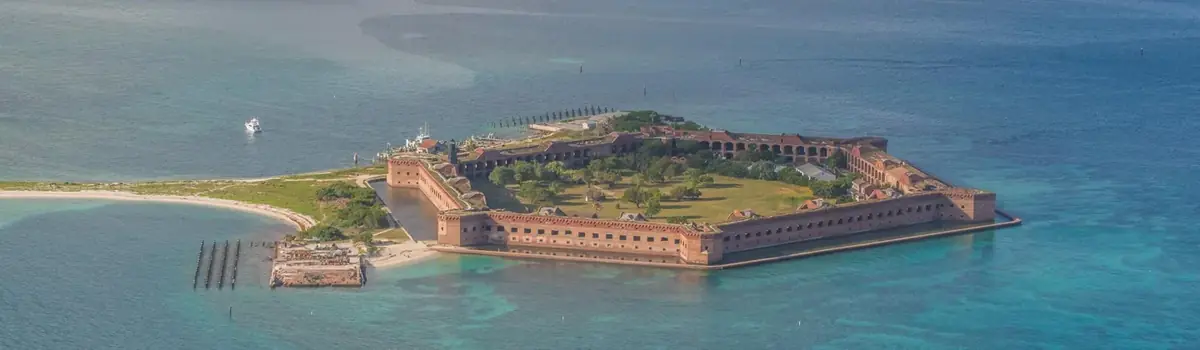
Almost 70 miles (113 km) west of Key West lies the remote Dry Tortugas National Park. This 100-square mile park is mostly open water with seven small islands. Accessible only by boat or seaplane, the park is known the world over as the home of magnificent Fort Jefferson, picturesque blue waters, superlative coral reefs and marine life, and the vast assortment of bird life that frequents the area.
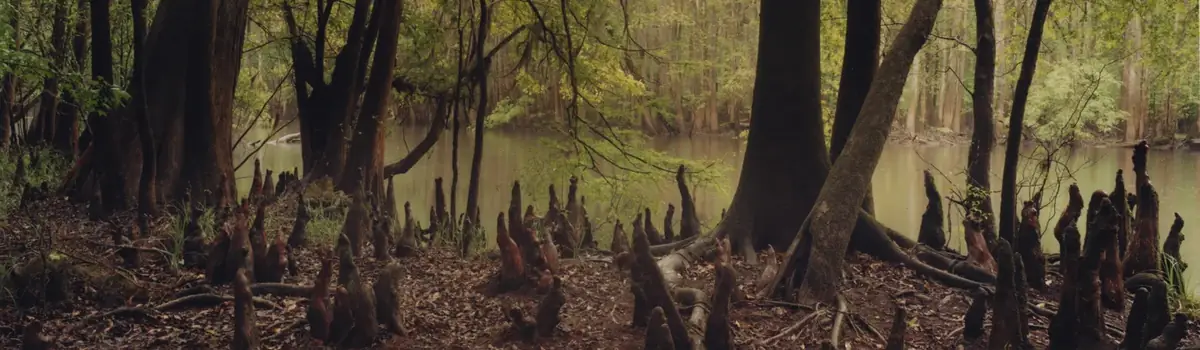
Astonishing biodiversity exists in Congaree National Park, the largest intact expanse of old growth bottomland hardwood forest remaining in the southeastern United States. Waters from the Congaree and Wateree Rivers sweep through the floodplain, carrying nutrients and sediments that nourish and rejuvenate this ecosystem and support the growth of national and state champion trees.




 Coast & islands